
Interactive 3D view
Your building drives the configuration
Pick a configuration from the list, then rotate the model to explore every detail: safety cage, parapet exit, staggered flights or cladding-mounted fixings.
- ✓ Five of the most common configurations
- ✓ Modular sections of 1.2 m (4 ft) and 3 m (10 ft)
- ✓ Lightweight, corrosion-resistant aluminum
- ✓ Custom built in Canada, designed to the applicable standards
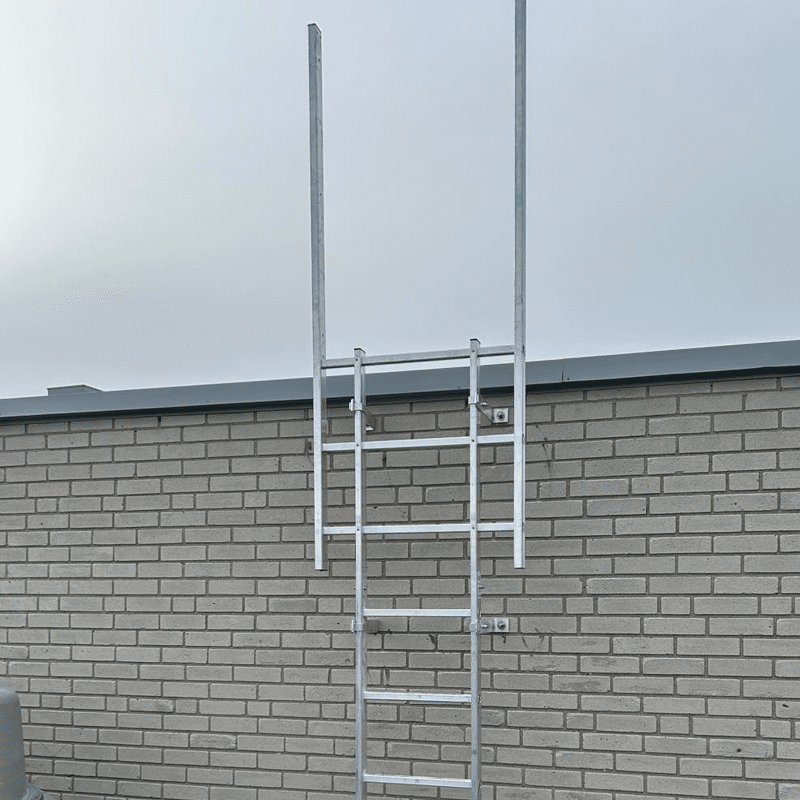
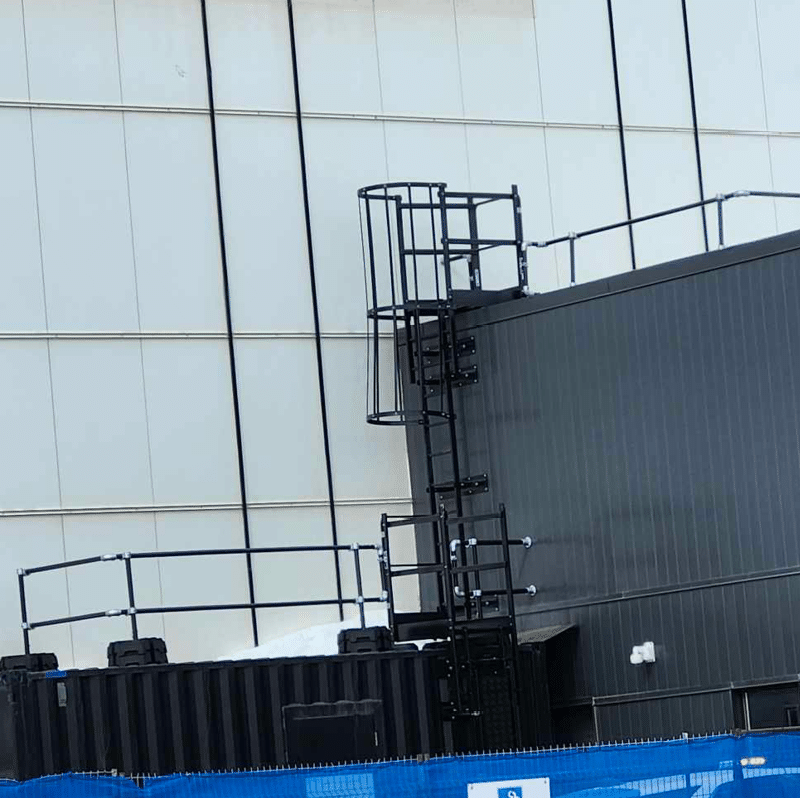
Torn between two configurations? The height of your access usually settles it: see the standard fixed ladder, the ladder with a vertical lifeline or the ladder with staggered flights.
Which fixed ladder for your height?
The height of the access determines the equipment required, and often the budget. The thresholds differ between Quebec and Ontario: we design your ladder for the province it will be installed in.
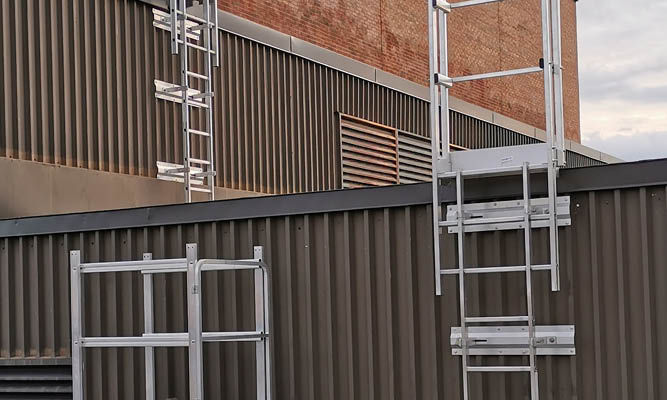
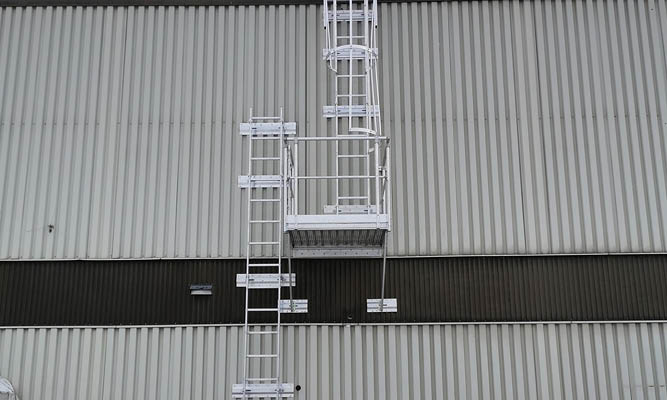
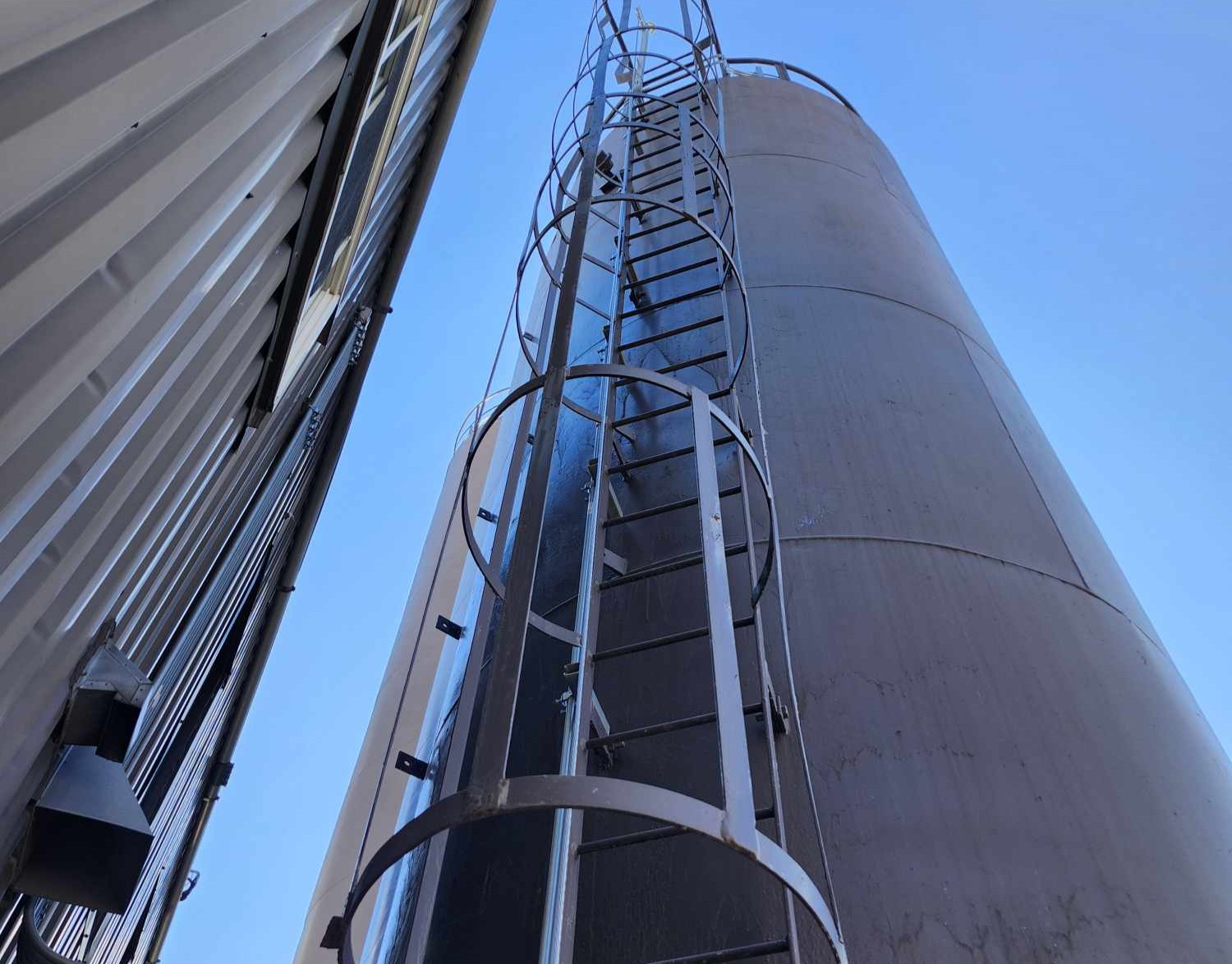
In Ontario, a safety cage is required beyond 5 m on fixed ladders in industrial establishments. See the Ontario requirements ›
Which mounting for which wall?
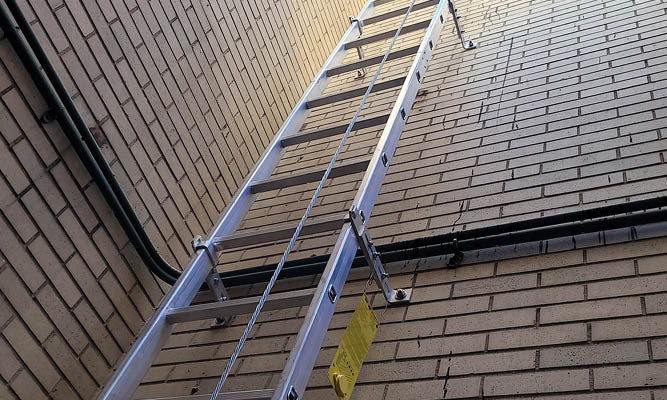
The supporting structure determines the mounting method. We check it during the site survey, then select the brackets with you.
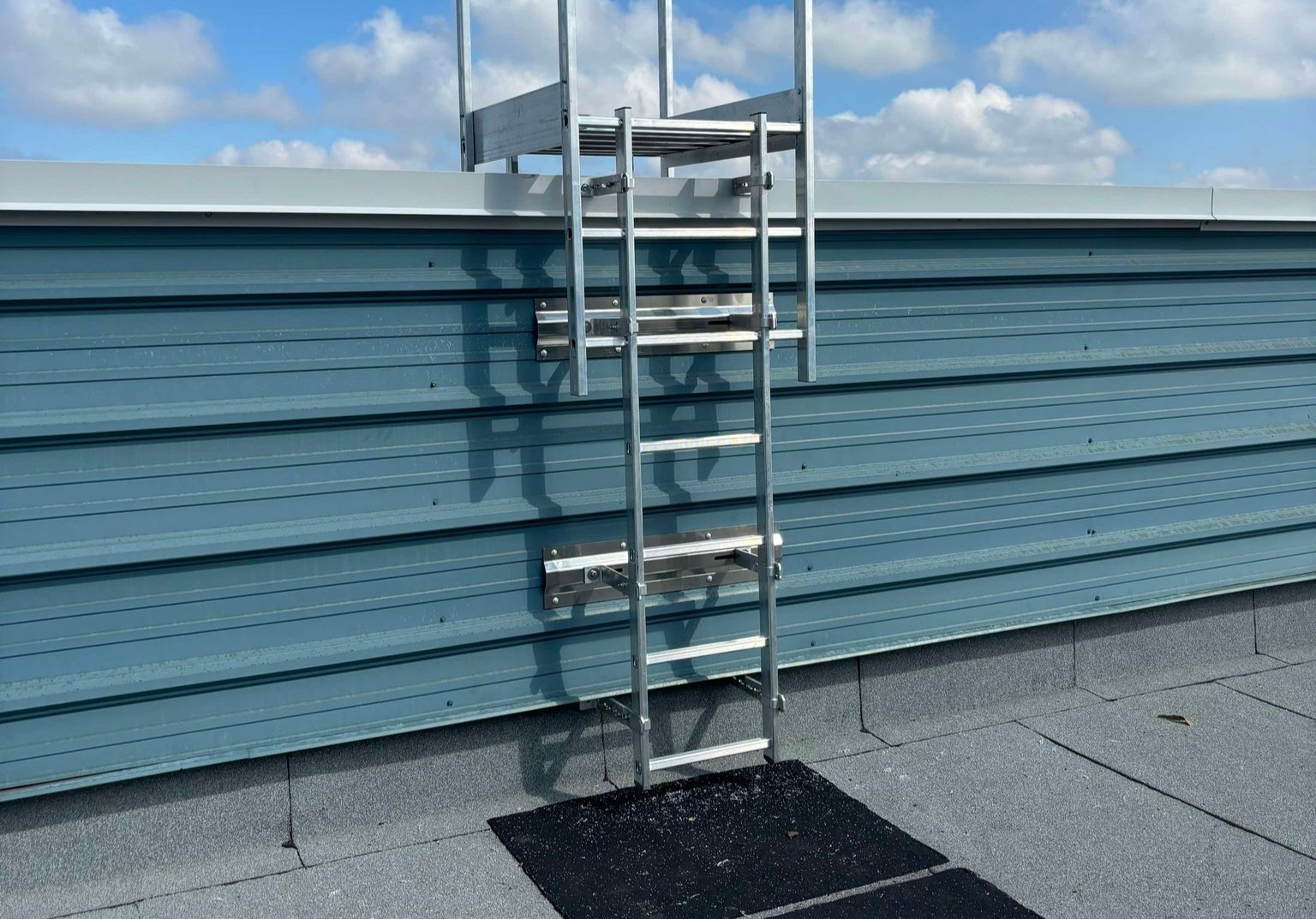
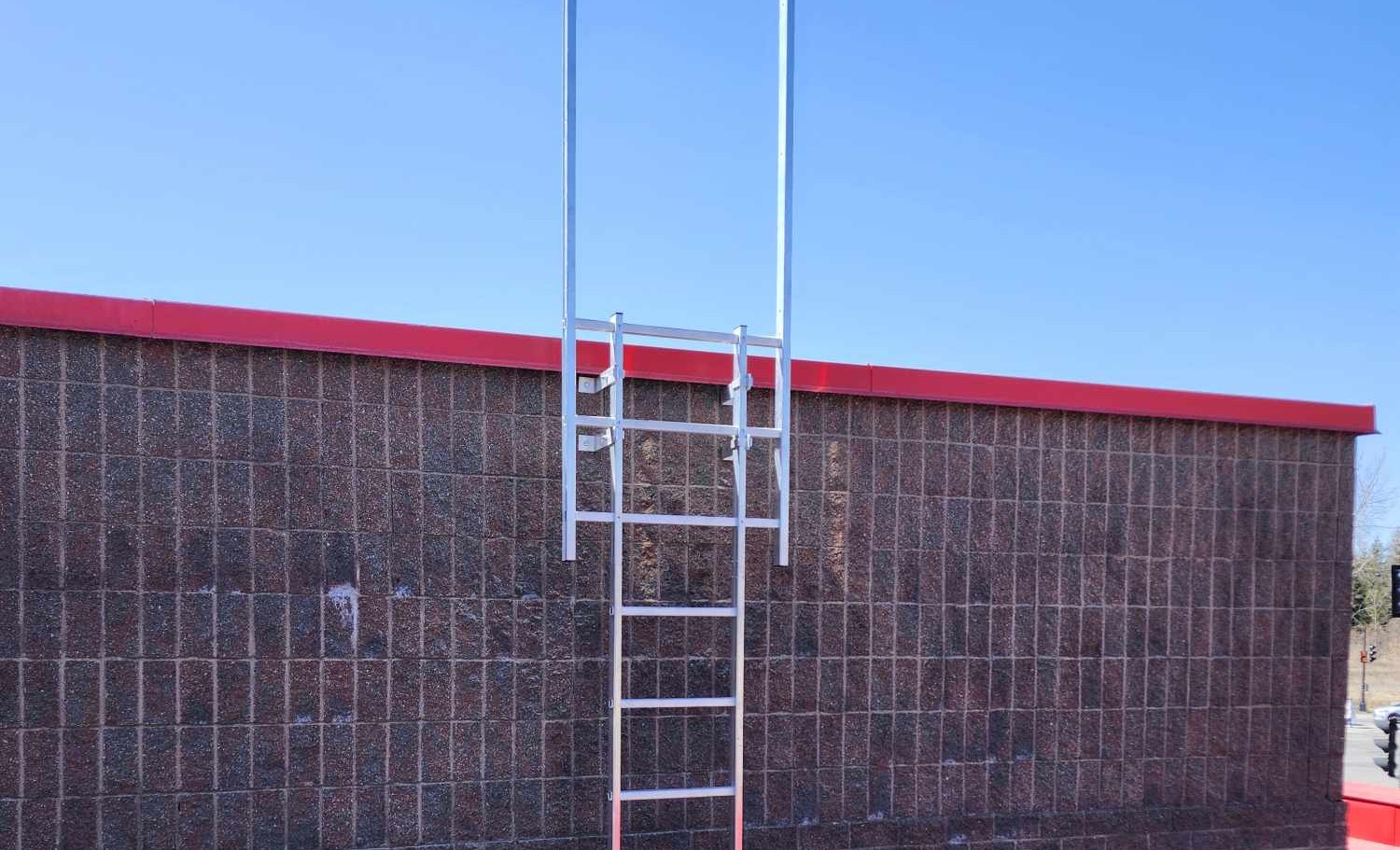
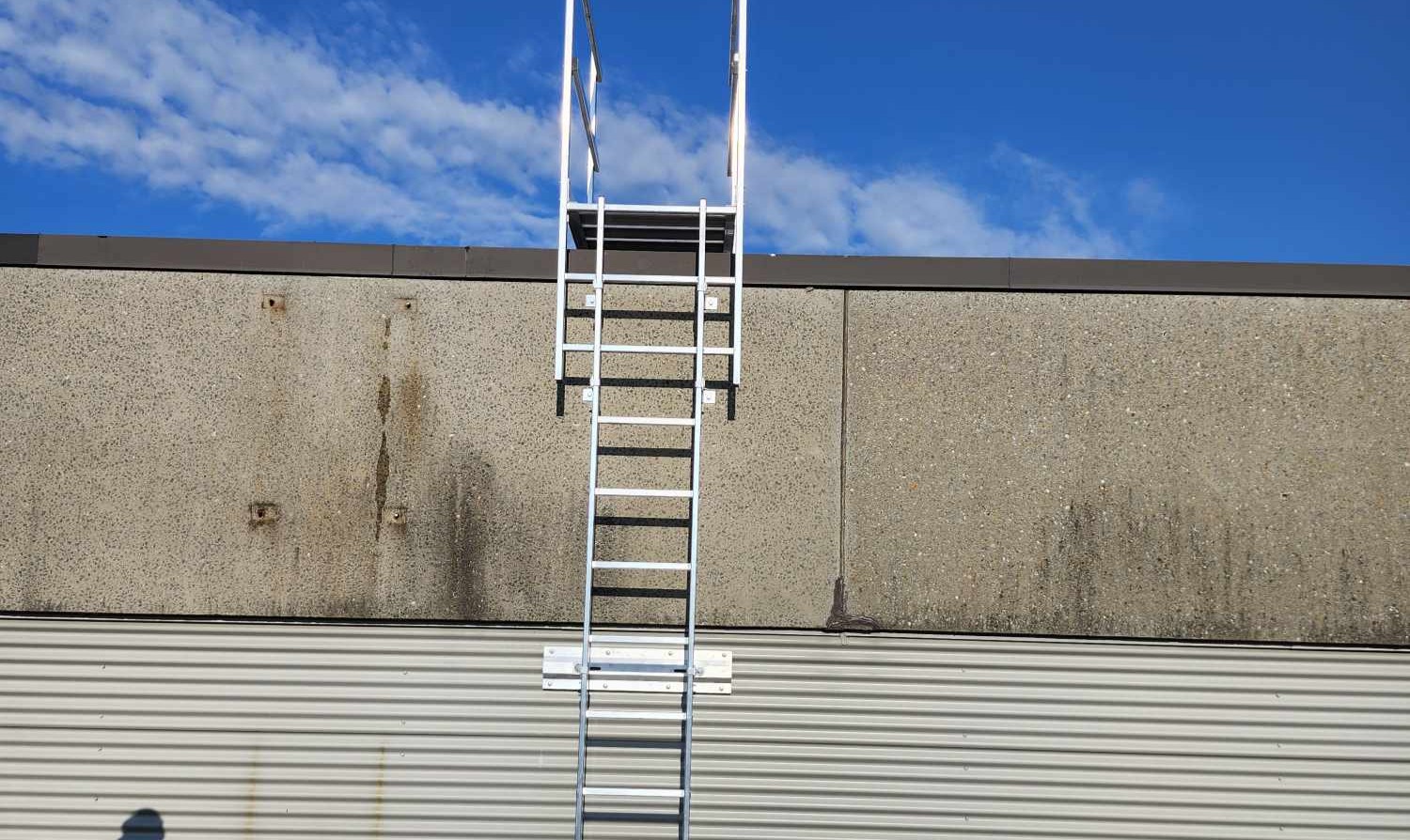
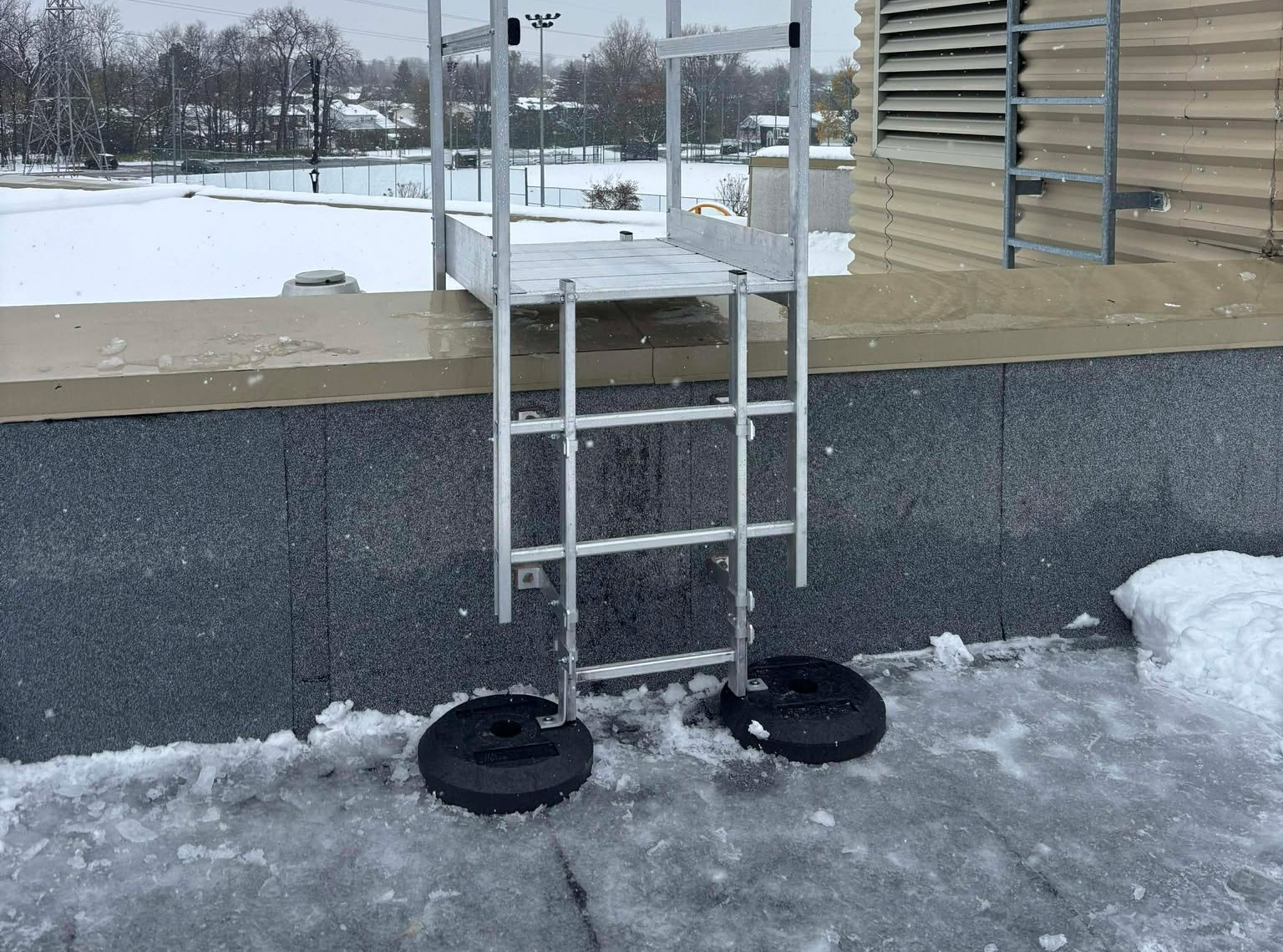
Not sure which mounting suits your building? Request a site survey ›
Quebec and Ontario: two regulatory frameworks
The requirements for a fixed ladder differ from one province to the other. Every project is designed for the province where it will be installed.
- In Quebec, section 23 of the RSST, enforced by the CNESST, sets the clearances, the extension above the top landing, the rest platforms and the fall arrest system required above 6 m (19 ft 8 in).
- In Ontario, Regulation 851 requires a safety cage on fixed ladders extending more than 5 m (16 ft), except on towers, water tanks, chimneys and similar structures, where a fall arrest system may replace it. Rest platforms there are no more than 9 m (29 ft 6 in) apart.
Projects – Design and installation of fixed ladders



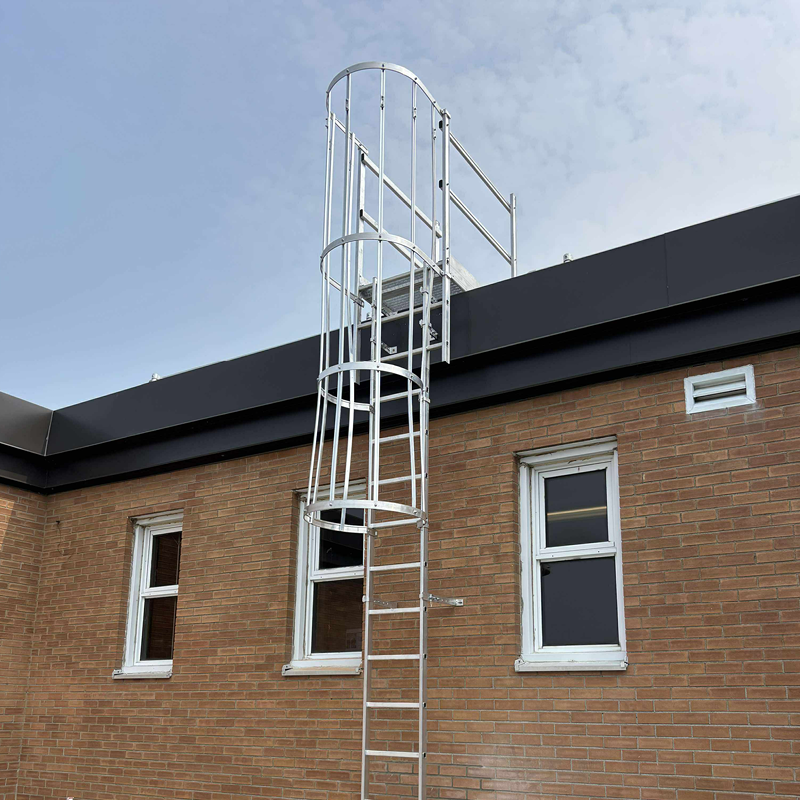
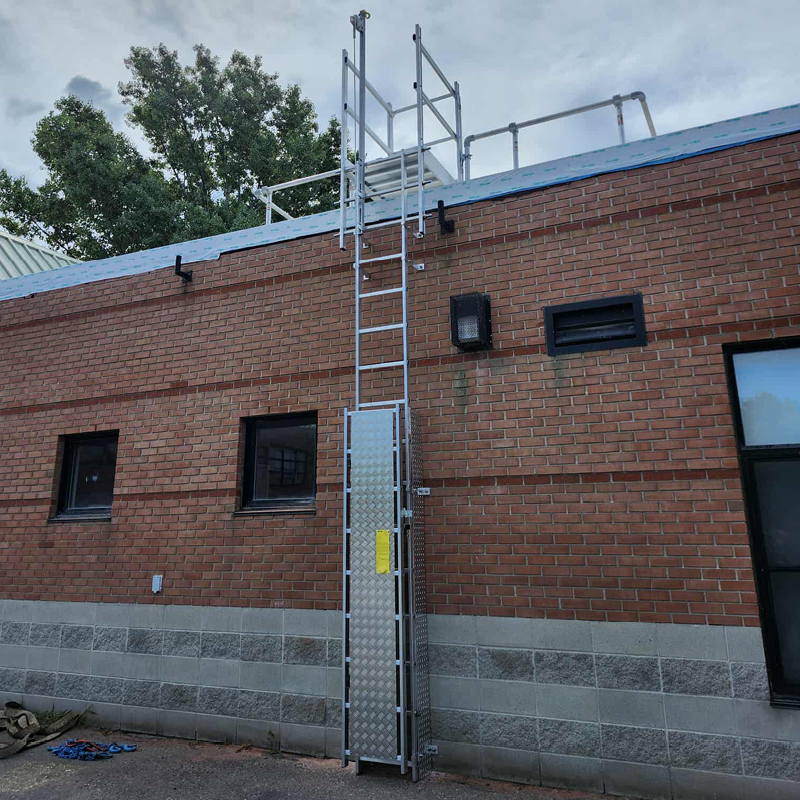


Your questions about fixed ladders
At what height is a fixed ladder required?
No regulation sets a single height. The real criterion is how often the access is used: for regular access to a roof, a mezzanine or a piece of equipment, a fixed ladder is the lasting solution, while a portable ladder remains an occasional means of access.
Which configuration should I pick in the 3D viewer?
The five configurations show the most common cases, but the height of the access and the province determine what is actually required. In Quebec, a fall arrest system is required above 6 m (19 ft 8 in) and rest platforms above 9 m (29 ft 6 in). In Ontario, a safety cage is required above 5 m (16 ft). Our advisors confirm the configuration during the site survey.
What are your fixed ladders made of?
Aluminum throughout. It does not rust, stays light to handle during assembly and keeps its strength in cold weather.
Do you work in both Quebec and Ontario?
Yes. Our teams operate out of our Laval, Longueuil, Quebec City and Toronto locations. Every project is designed to the regulations of the province where it is installed.
Can you work on an existing ladder?
Yes. We handle both new projects and existing installations, typically to add a fall arrest system or an access restriction system.
Do you provide drawings?
DXF and DWG files are available on request for your engineering office, and a certificate of conformity is supplied with every installation.


