
What do you need?
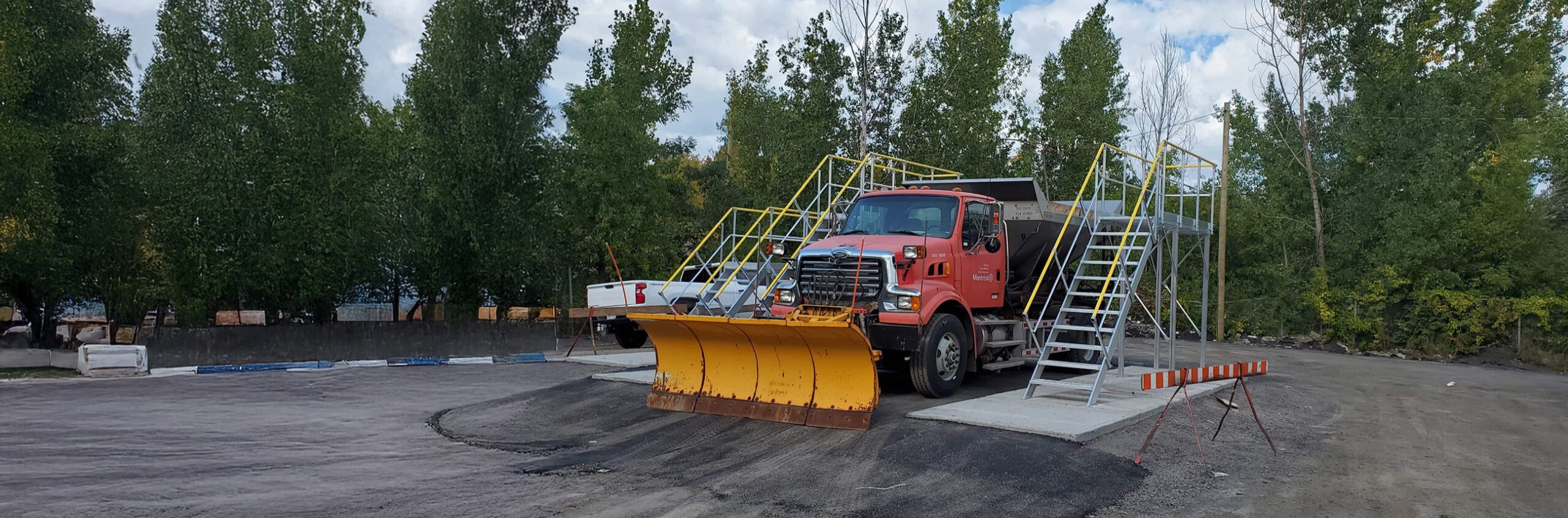
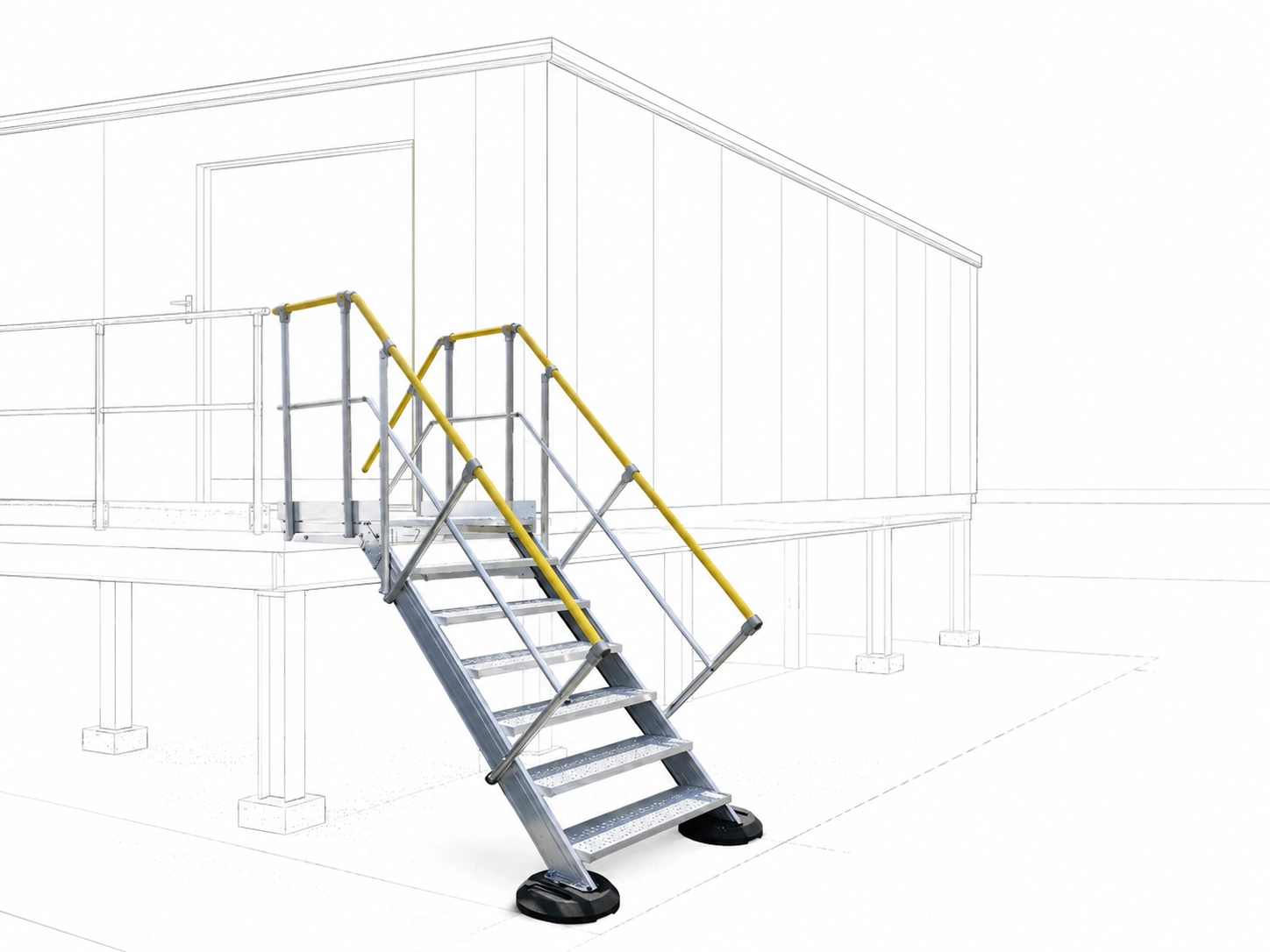
Four situations cover the vast majority of the projects we design. Each one calls for a different piece of equipment.
Protection without equipping every worker
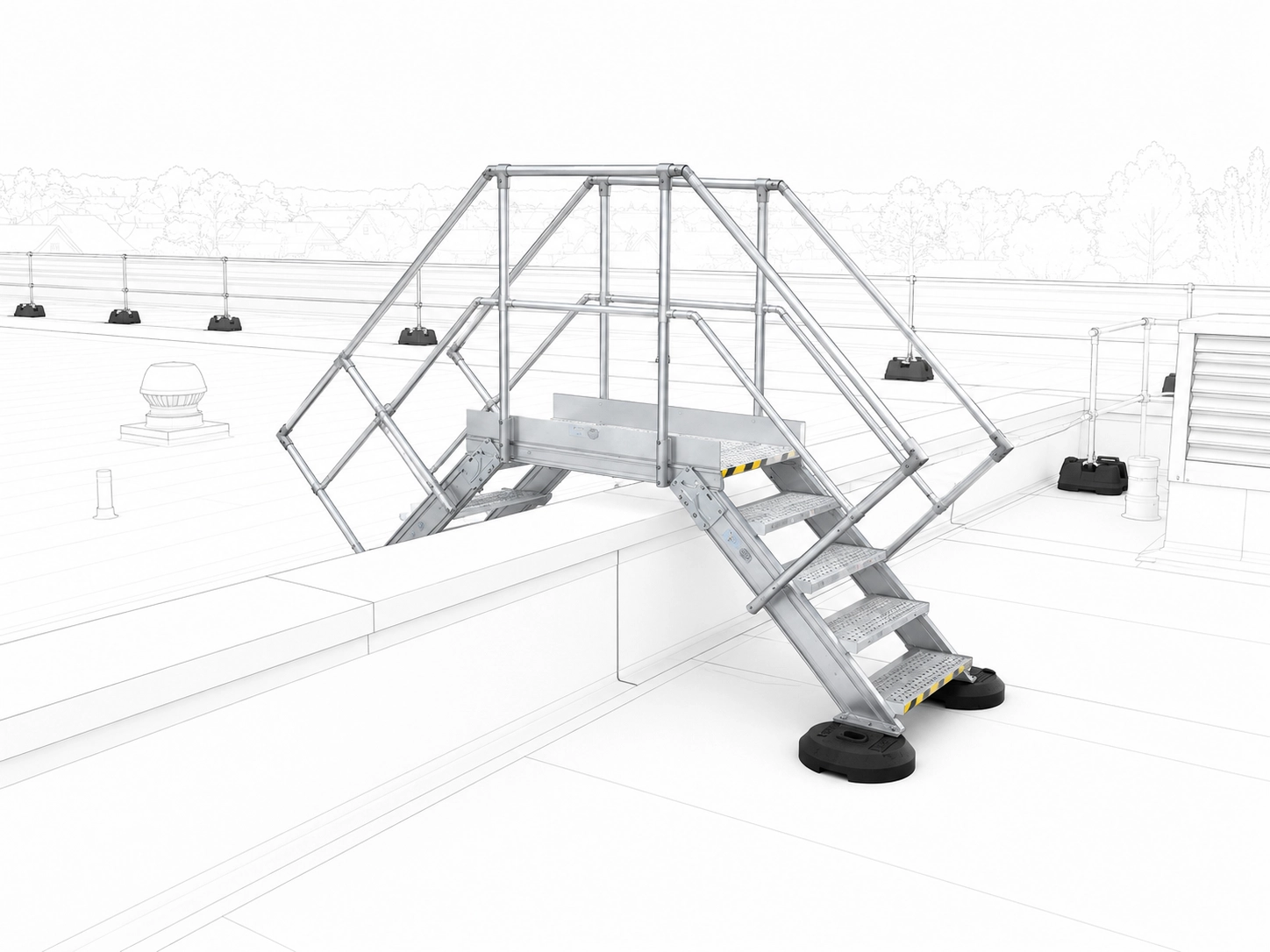
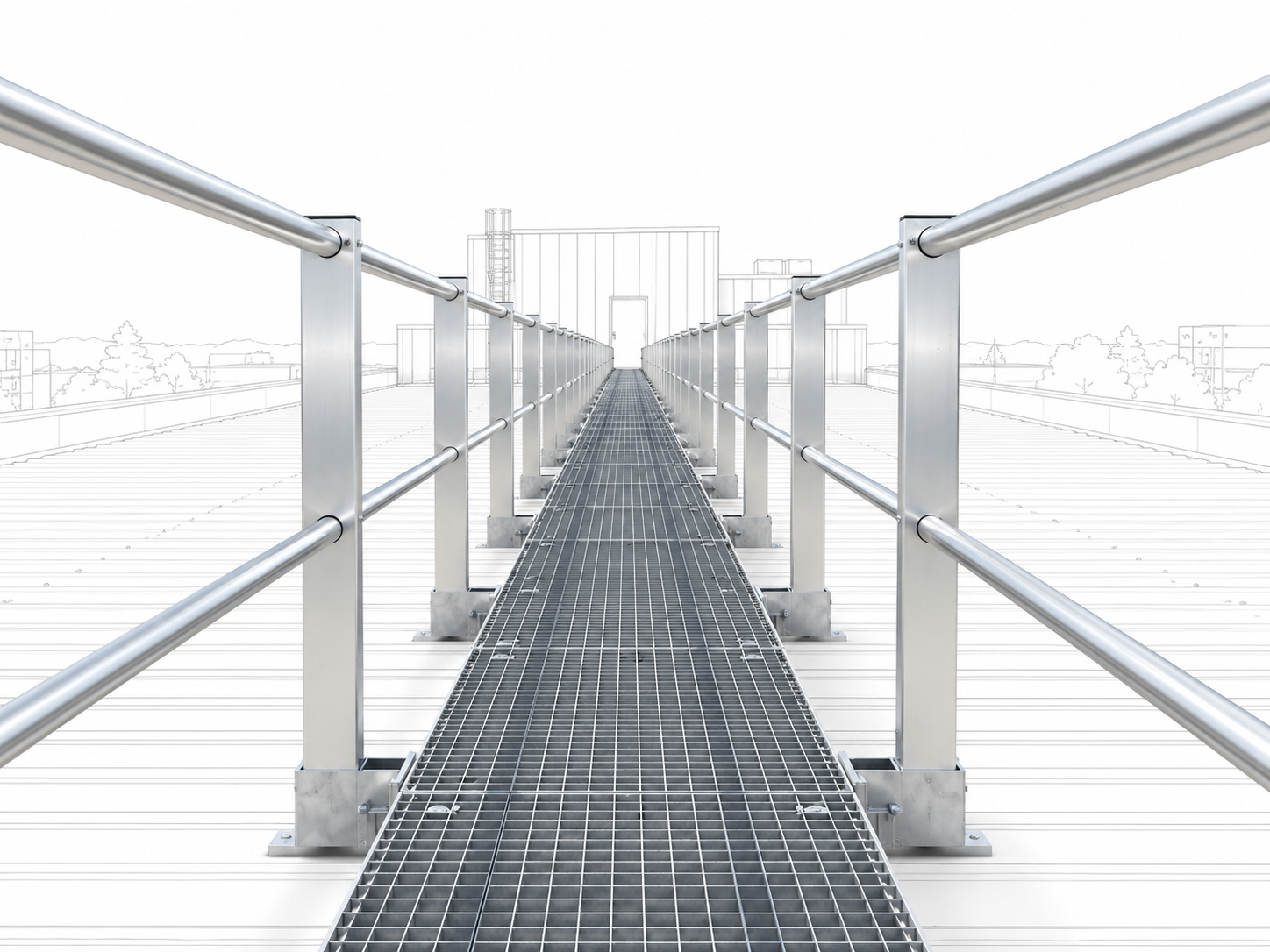
A route protected by guardrails secures movement without requiring personal fall arrest equipment. This is more than a convenience: in Quebec, the Regulation respecting occupational health and safety ranks guardrails ahead of harnesses among prevention measures.
Designing a protected permanent access therefore deals with the hazard at the right level, without depending on the correct use of a harness or on training every person who climbs.
Common to the whole range
Aluminum and galvanized steel
Aluminum for light weight and corrosion resistance, galvanized steel for the most demanding environments. Handrails in anodized aluminum.
LEEVELGRIP decking
Our exclusive non-slip, draining surface on steps and platforms. Striped aluminum or grating available as an option.
Bolted assembly
No welding on site. Equipment is delivered in pre-assembled modules and bolted together, which limits the impact on your operations.
Walking widths
600, 800 and 1000 mm (24, 31.5 and 39 in) as standard, and up to 1400 mm (55 in) made to measure.
Built-in guardrails
Fixed, removable or folding depending on the configuration, with self-closing or saloon gates on platforms.
Built in Canada
Designed and assembled in our workshops, in Montreal and in Ontario, then installed by our teams.
From engineering to installation
Custom equipment is designed before it is built. Here are the stages every project goes through.
Feasibility study
On-site survey, analysis of constraints and bearing points, free assessment of your existing installation.
2D and 3D drawings
You approve the design before anything is manufactured. Drawings can be signed and sealed by an engineer when the project calls for it.
Calculations and testing
Material strength, tipping, concentrated load and deformation simulations, then cutting plans.
Manufacturing
Production in pre-assembled modules in our Canadian workshops, tested before shipping.
Installation
Fitting and commissioning by our teams, with no welding on site.
A local team, backed by a group
Our technical advisors work out of our four locations in Laval, Longueuil, Quebec City and Toronto. Behind them stand more than 40 years of height access expertise, a range proven in the field and an in-house engineering office.
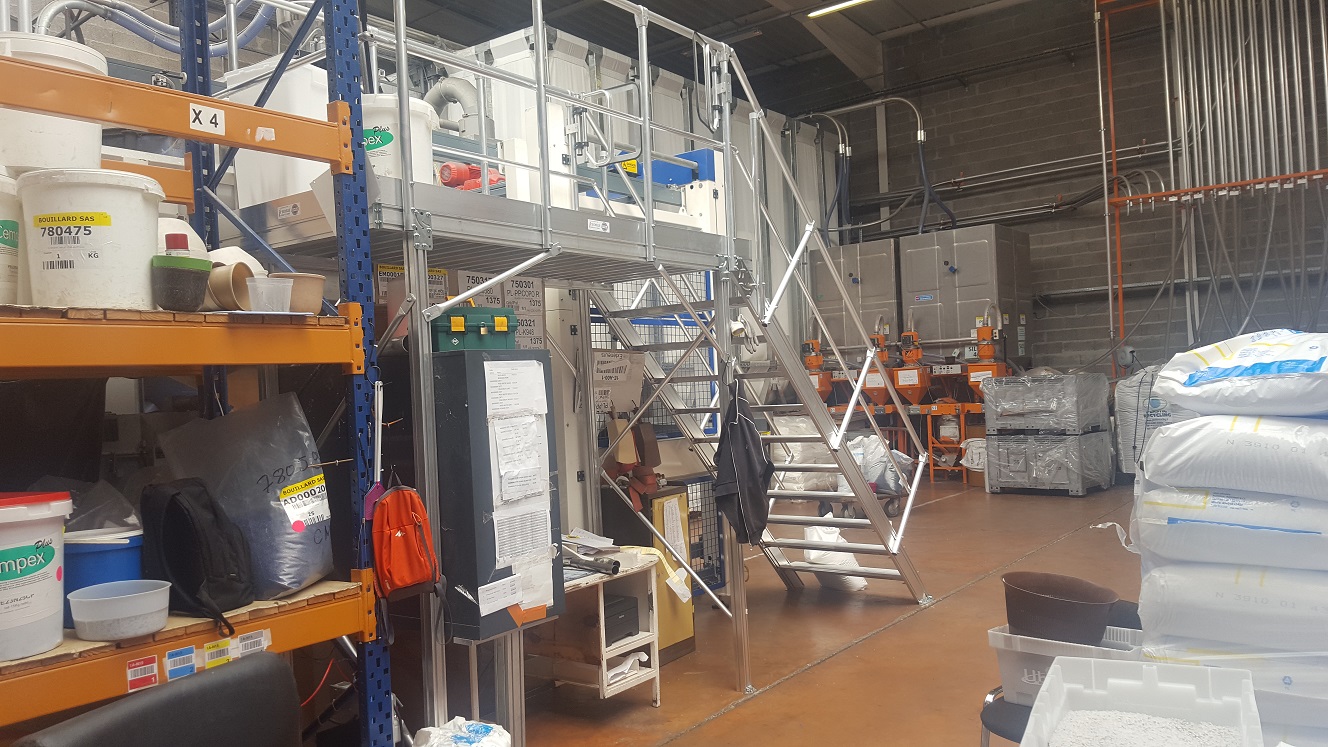
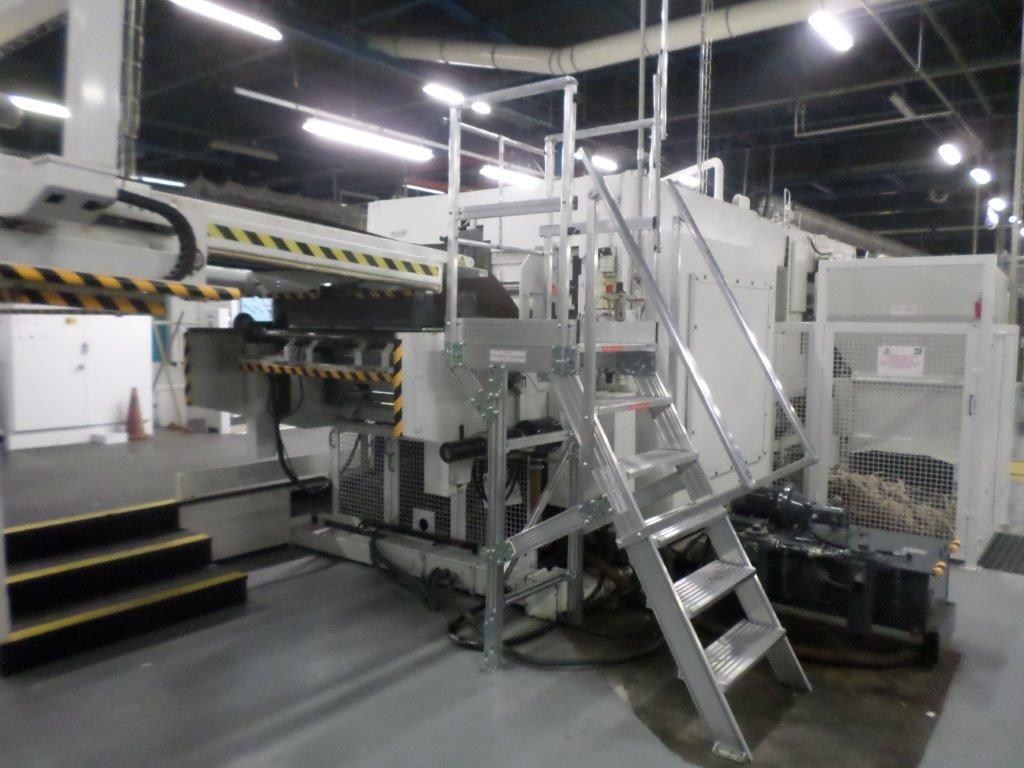
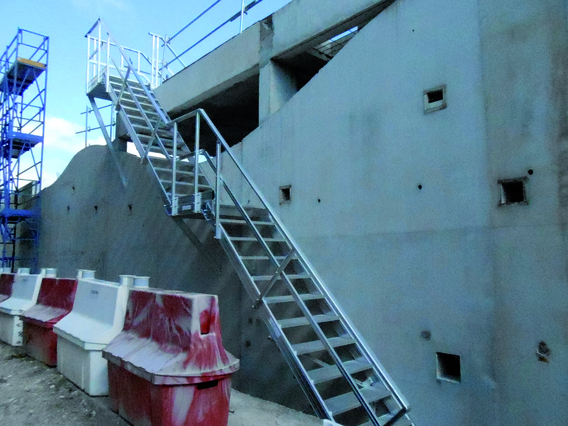
Our equipment serves industrial, rail, municipal and construction sites, from a single working position to dozens of linear metres of walkway along a production line.
Our LEEVEL work




Your questions about custom access
What can you build to measure?
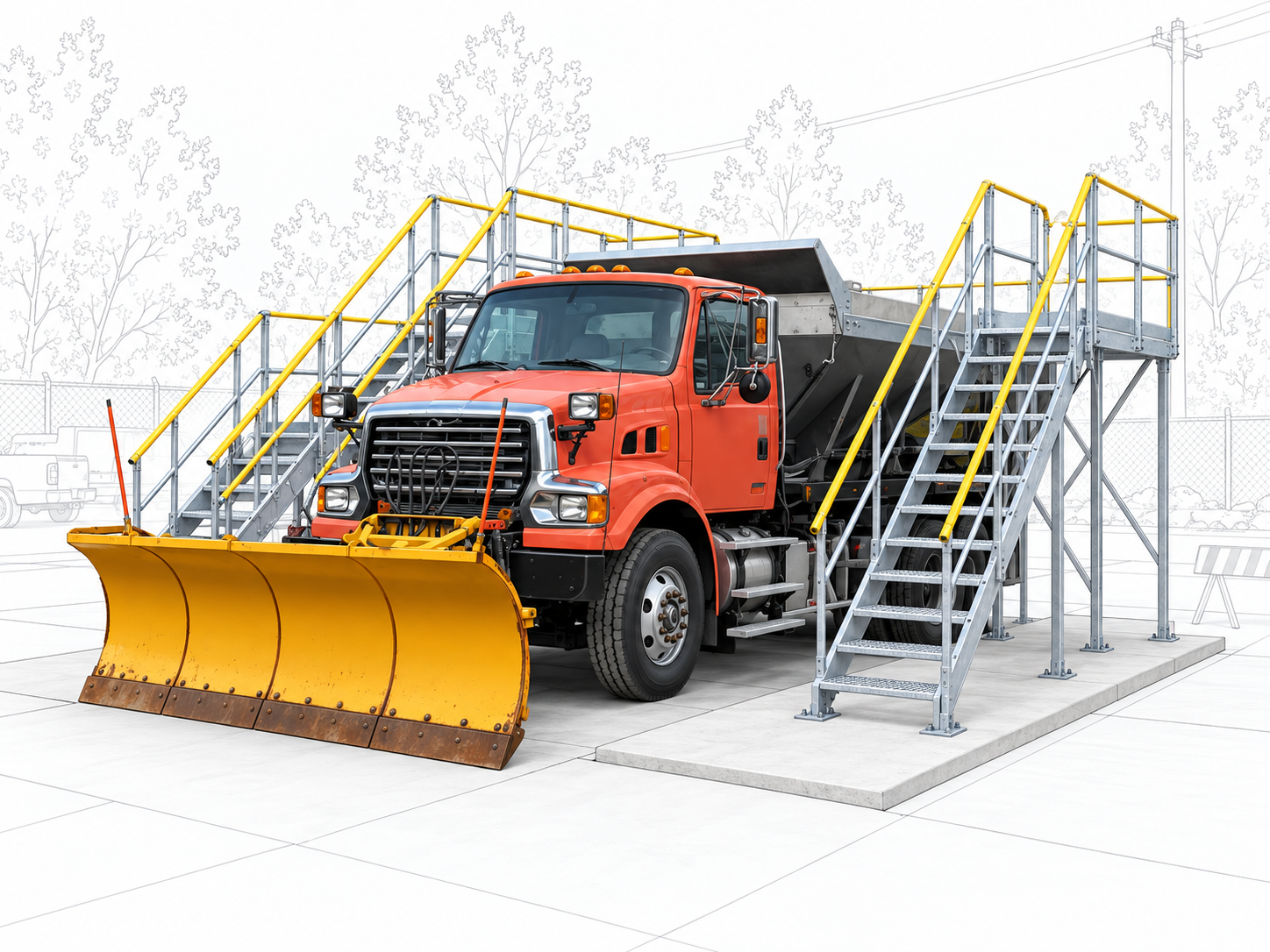
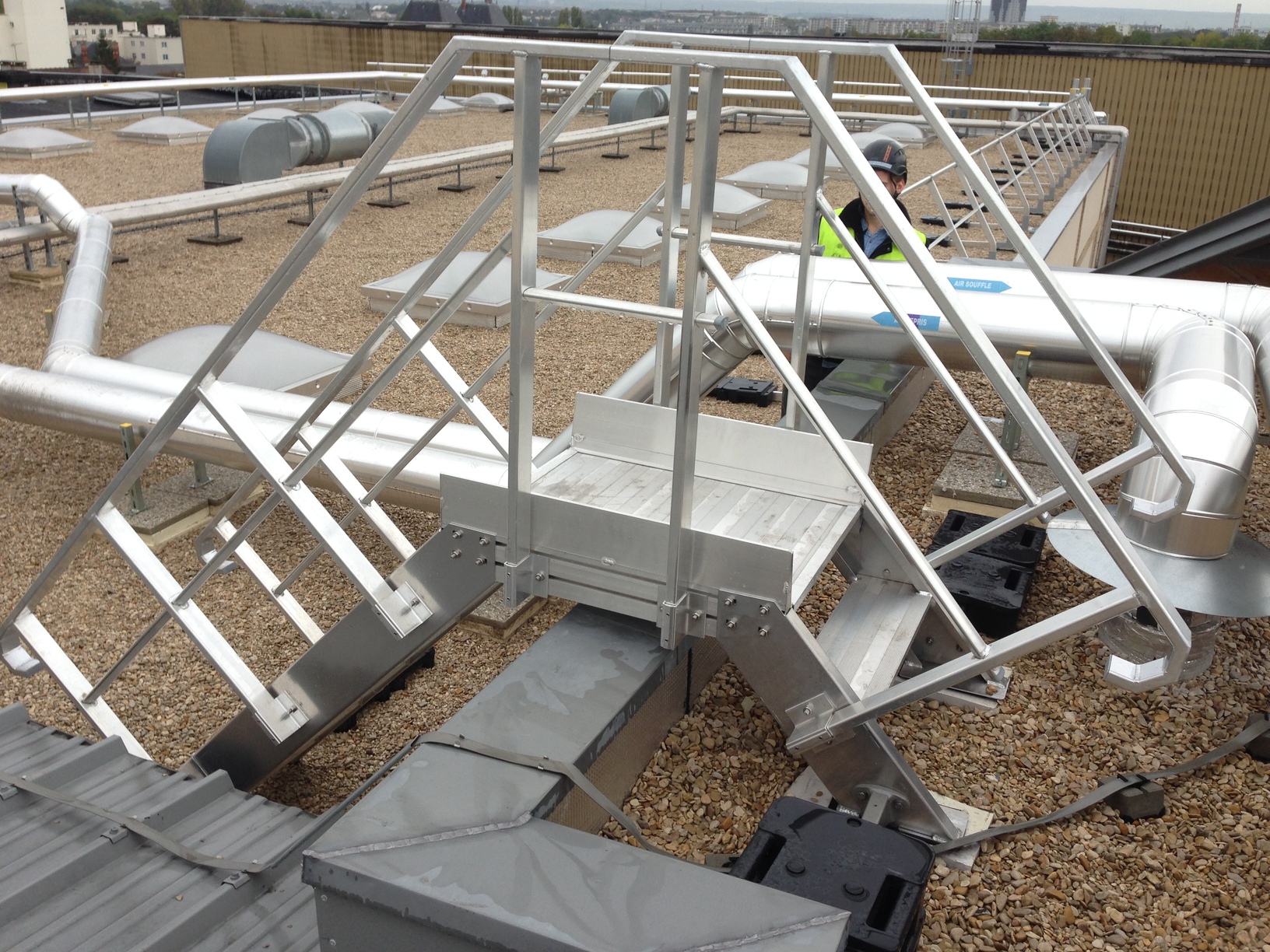
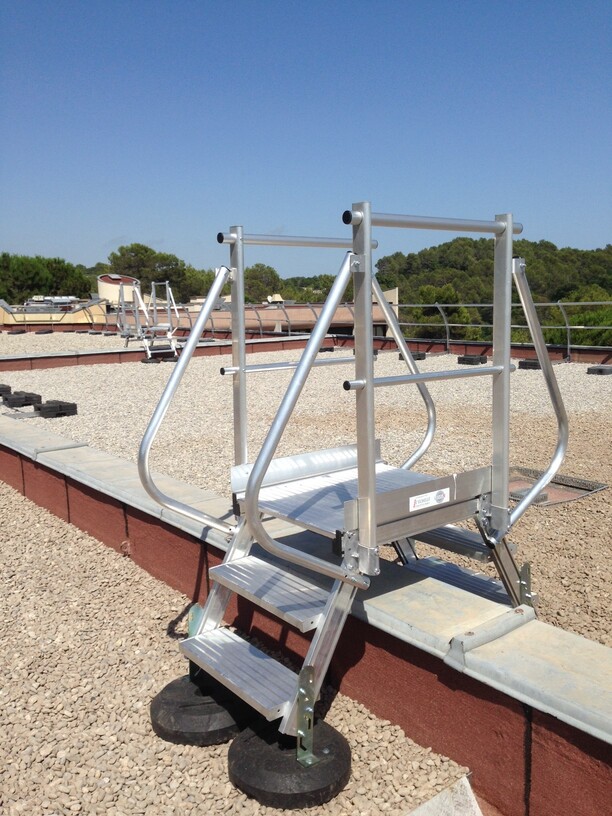
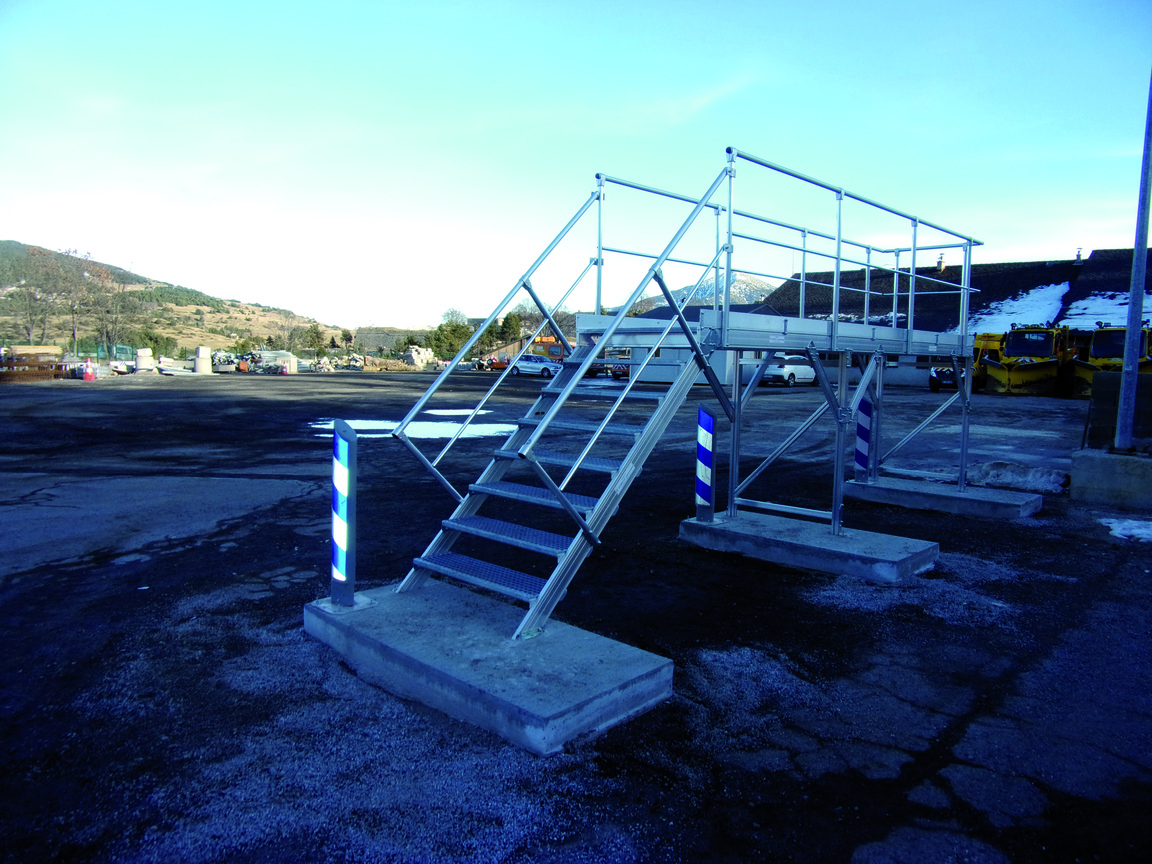
Industrial stairs, crossover walkways, access walkways, fixed or mobile work platforms and steps. These elements combine to create complete access to your equipment.
Aluminum or galvanized steel?
Aluminum suits most uses: light to handle during assembly, it does not rust and needs little maintenance. Galvanized steel is chosen for the most demanding environments. Our advisors will guide you based on your site.
Can you install without drilling into the roof?
Yes, depending on the configuration. Our crossover walkways sit on resin pads with no drilling into the building, and our access walkways fix onto steel deck, fibre cement or waterproofing pads.
Is a harness needed on your walkways?
A route protected by guardrails secures movement without requiring personal fall arrest equipment. That is also the order of priority Quebec regulations set out.
Can you work without stopping production?
In most cases. Bolted assembly avoids any welding on site, and pre-assembled modules cut down the time spent there.
Do you work in both Quebec and Ontario?
Yes. Our teams operate out of Laval, Longueuil, Quebec City and Toronto, and every project is designed to the regulations of the province where it is installed.


