

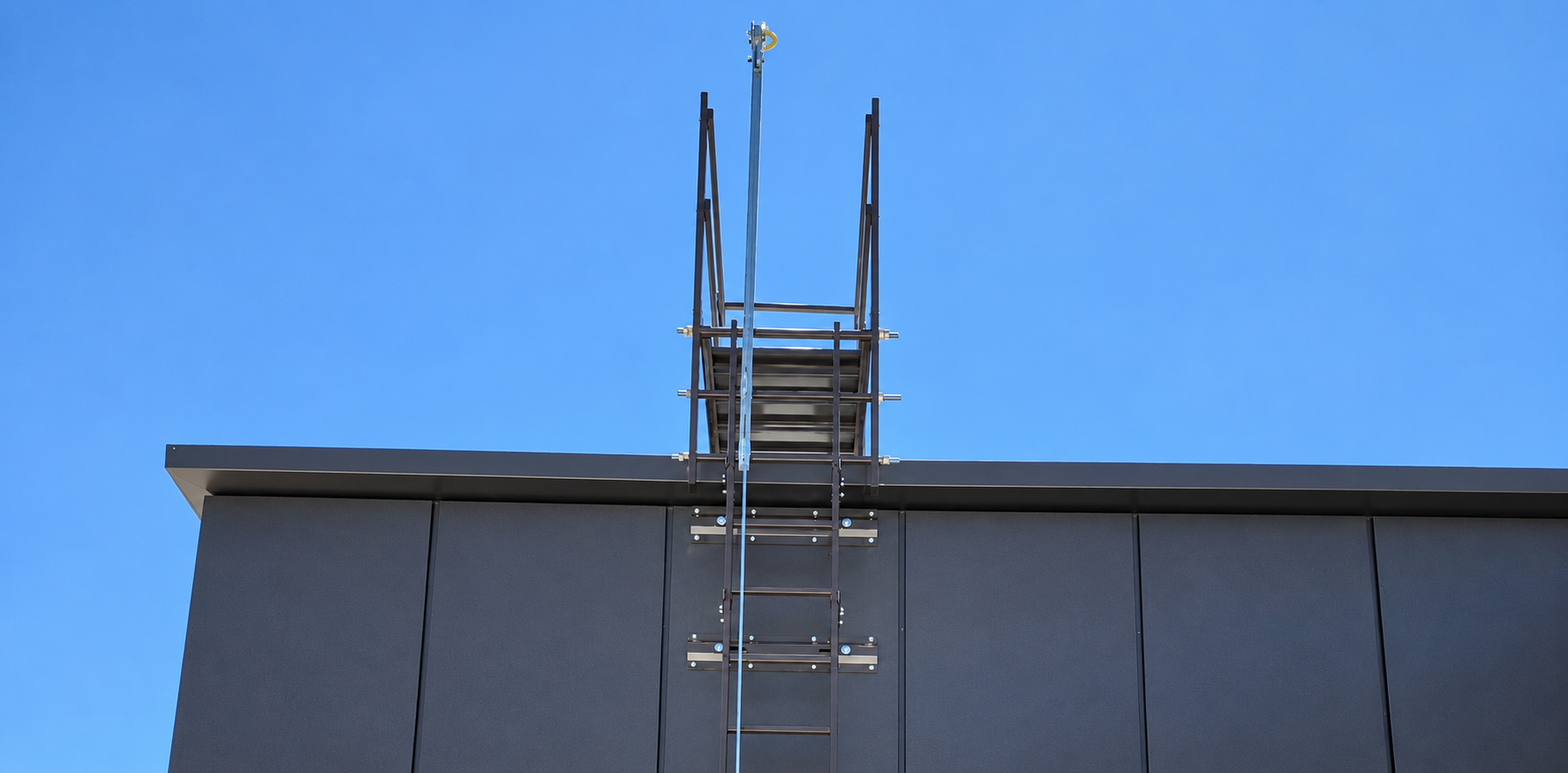
To reach a low roof, a mezzanine or the top of a machine, a standard aluminum fixed ladder is often all you need. With no fall arrest system, it is quicker to install and more affordable.
In Quebec, the threshold is a 6 m (19 ft 8 in) fall hazard: above it you need a fixed ladder with a vertical lifeline, and above 9 m (29 ft 6 in) a ladder with staggered flights. In Ontario, a safety cage is required from 5 m (16 ft). See the full range on our custom fixed ladders page.
When is it the right choice?
Four situations cover the vast majority of the projects we install.
Low roof
Access to an annex roof, a canopy or a low-level covering.
Mezzanine and dock
Access to an intermediate level, a loading dock or a technical platform.
Machine access
Climbing to the top of a piece of equipment for routine maintenance.
Technical hatch
Access through a hatch, with an exit suited to the opening and the grab point.
Keeping access to authorized people only
A fixed ladder reachable from the ground can be climbed by anyone: an untrained employee, a passing contractor, an intruder. Several systems restrict that access, and the right one depends on how often the ladder is used and on the level of risk.
- Half door: closes off the lower part of the ladder, a deterrent that stays quick to operate day to day.
- Door with cover plate: lockable, to keep access to key holders.
- Retractable entry: removes the first rungs when the ladder is not in use.
- Safety cage with a locking door: where the building configuration calls for it.
Our advisors will guide you during the on-site survey, based on who needs to reach the equipment and how often.
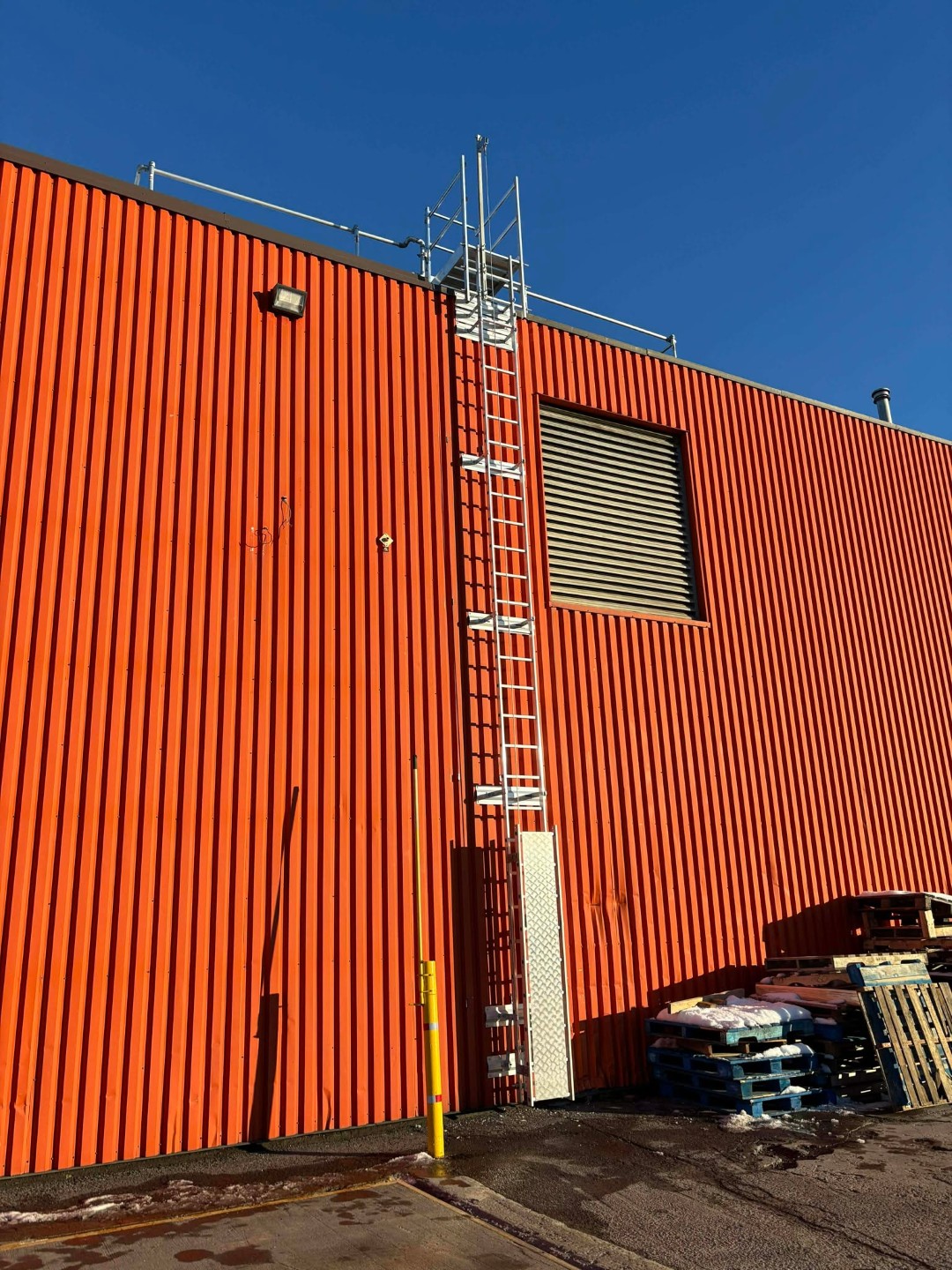
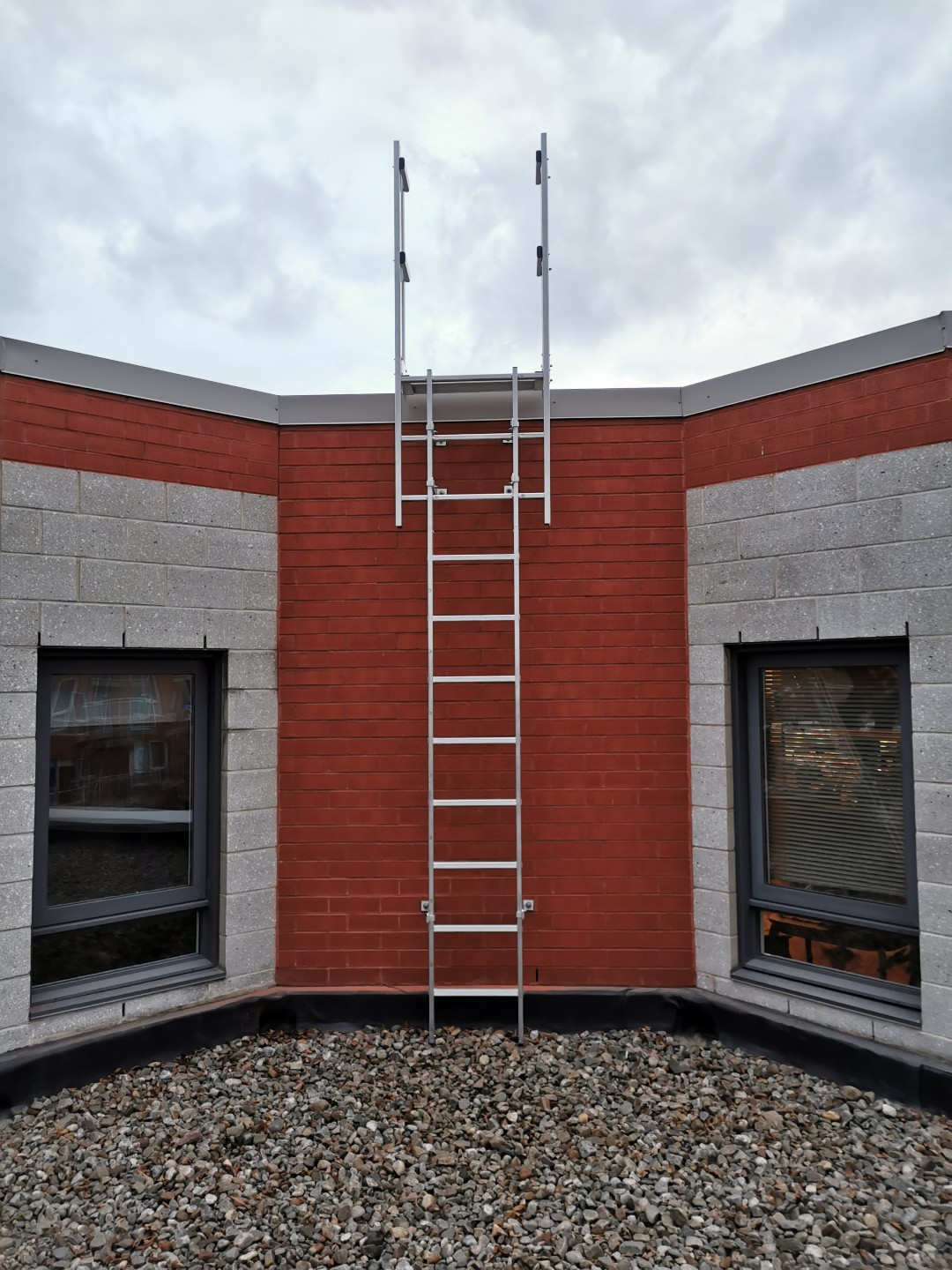
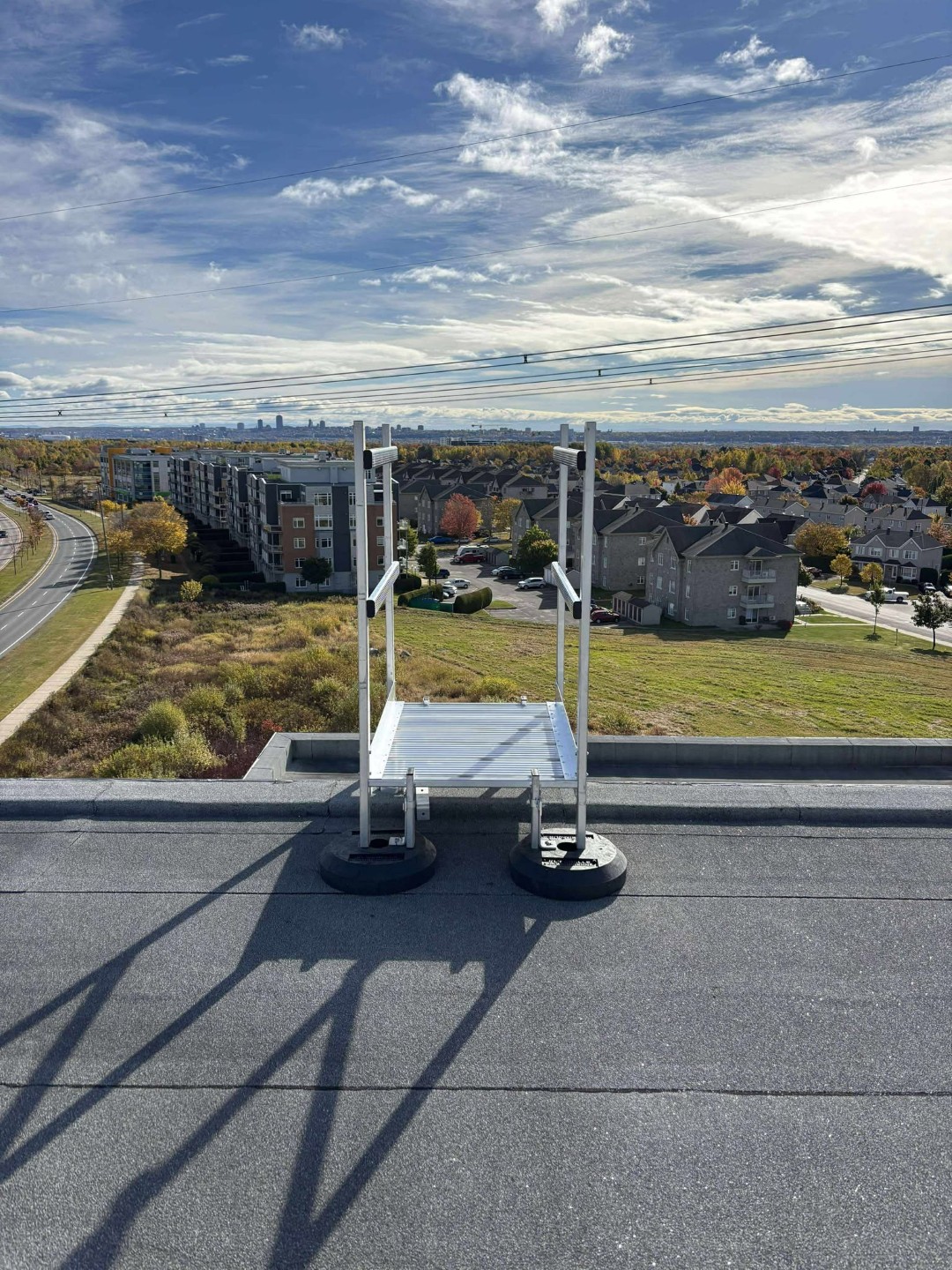
Our work – standard fixed ladders
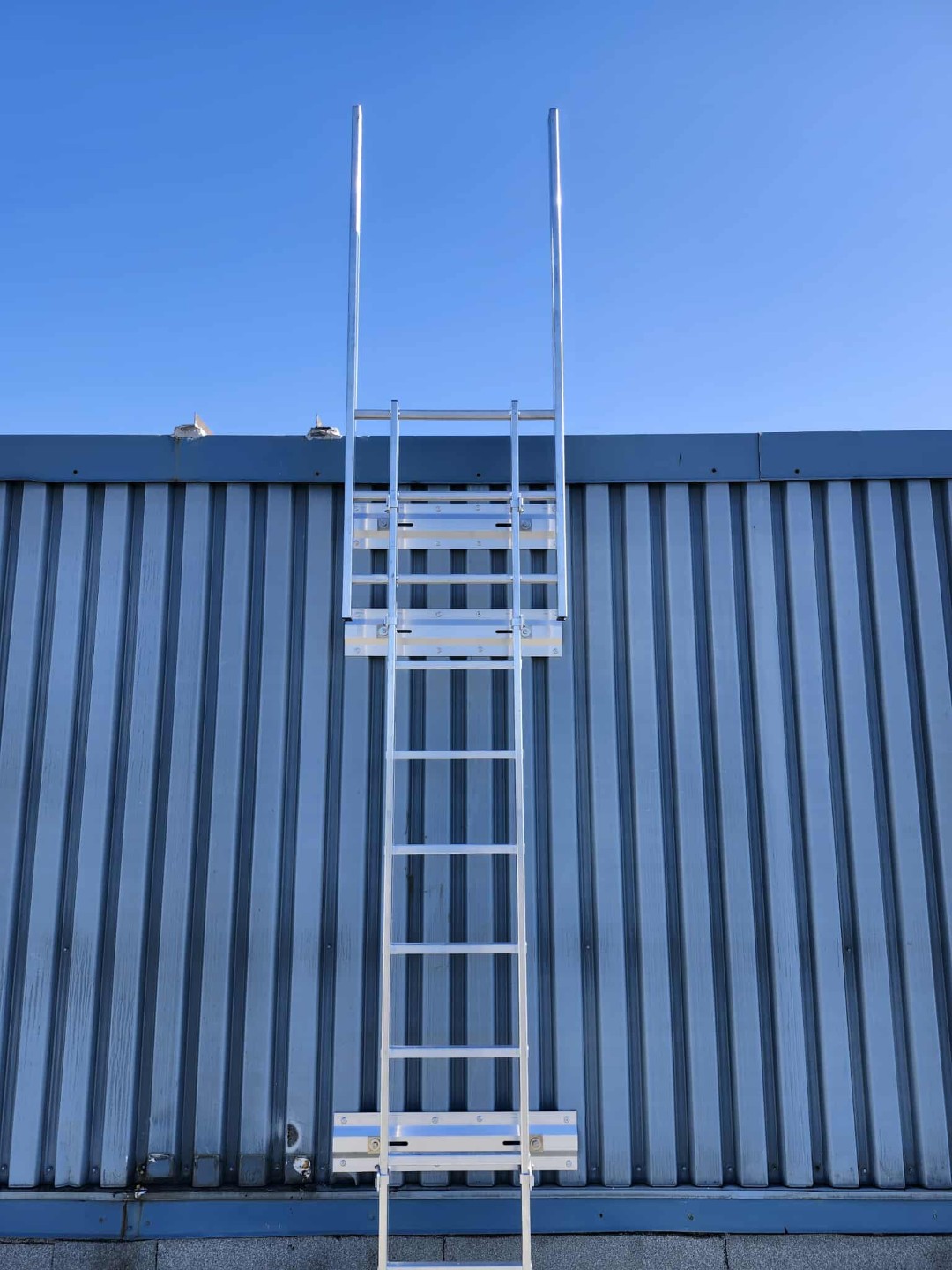
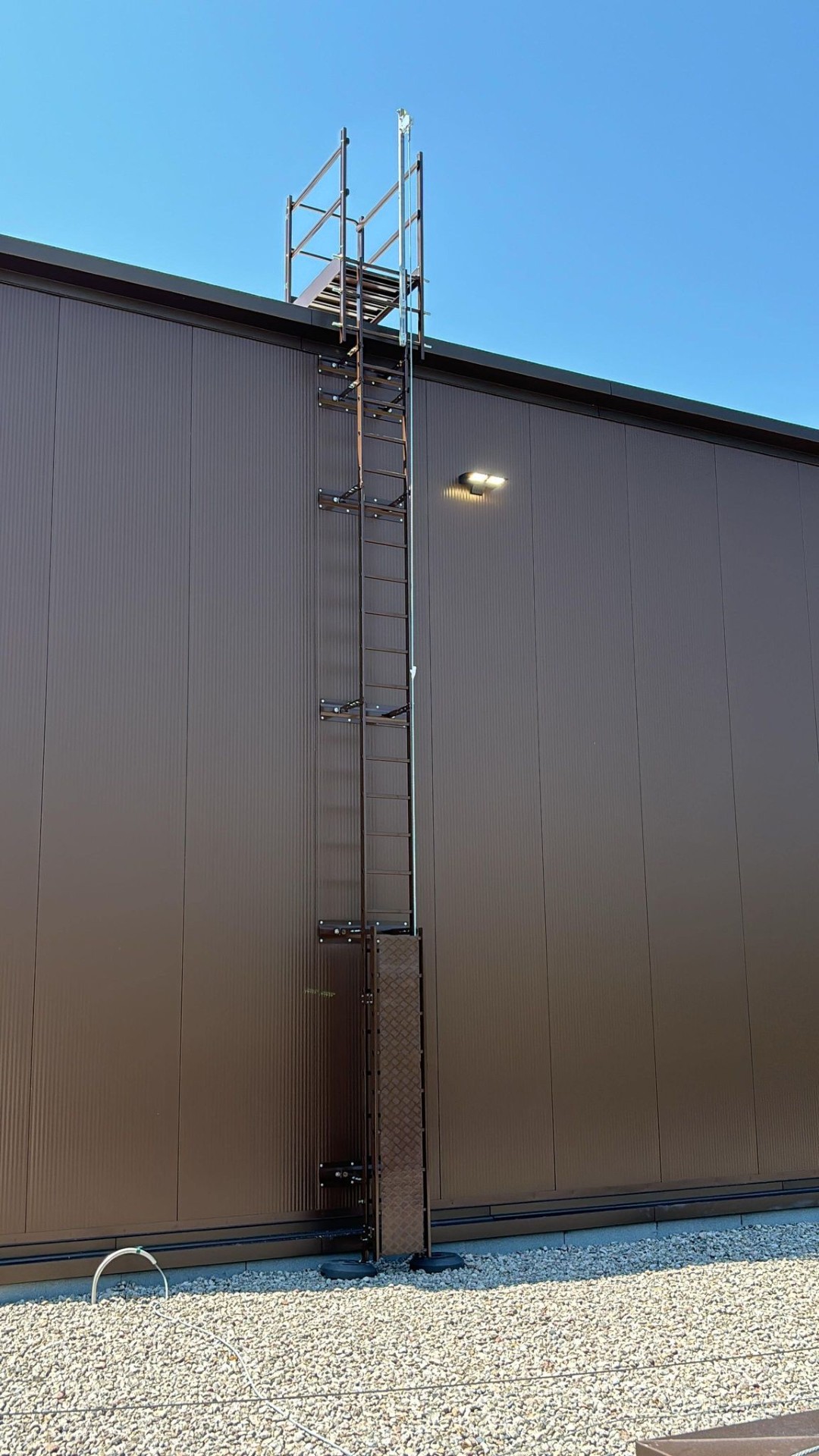
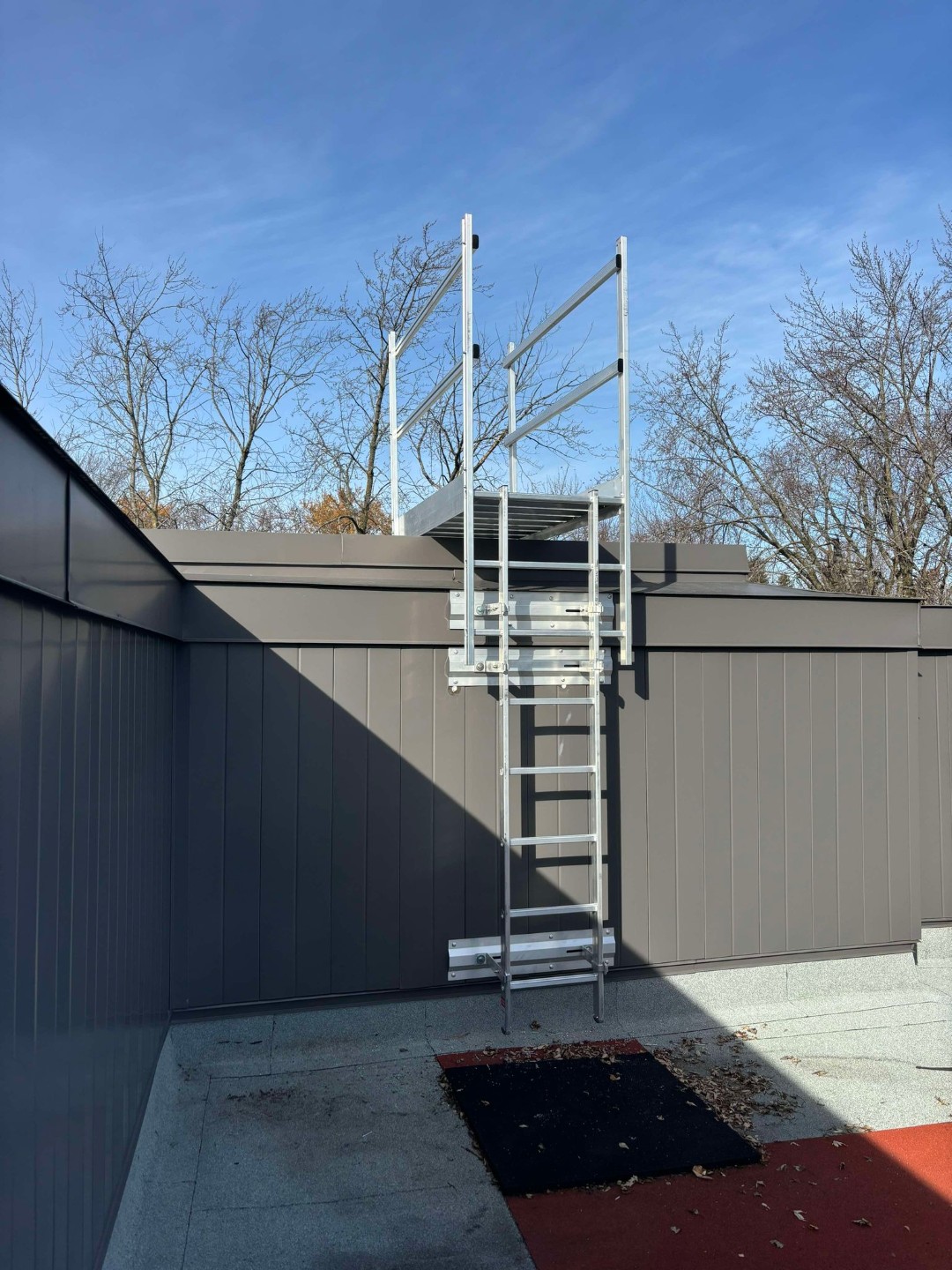
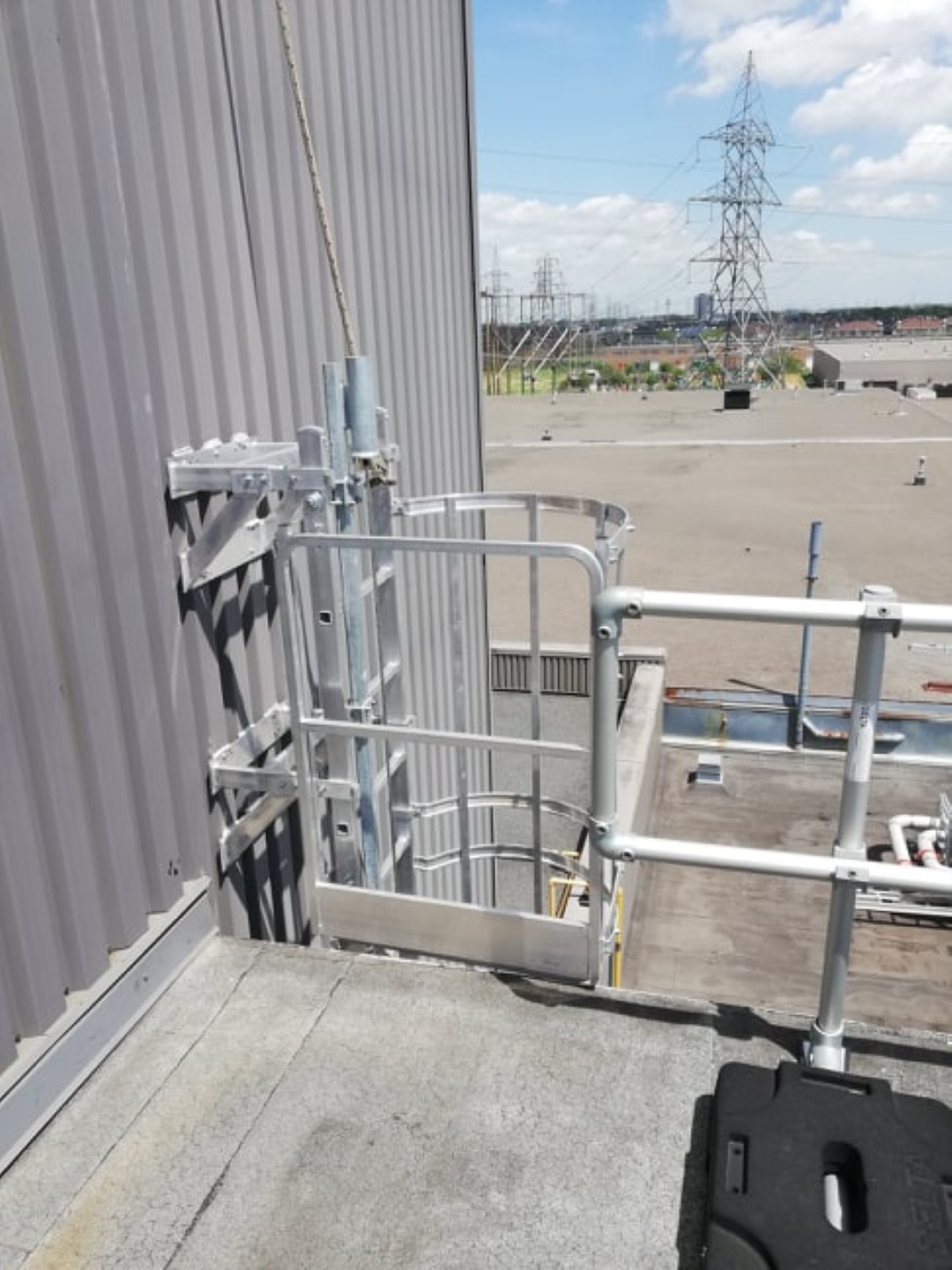
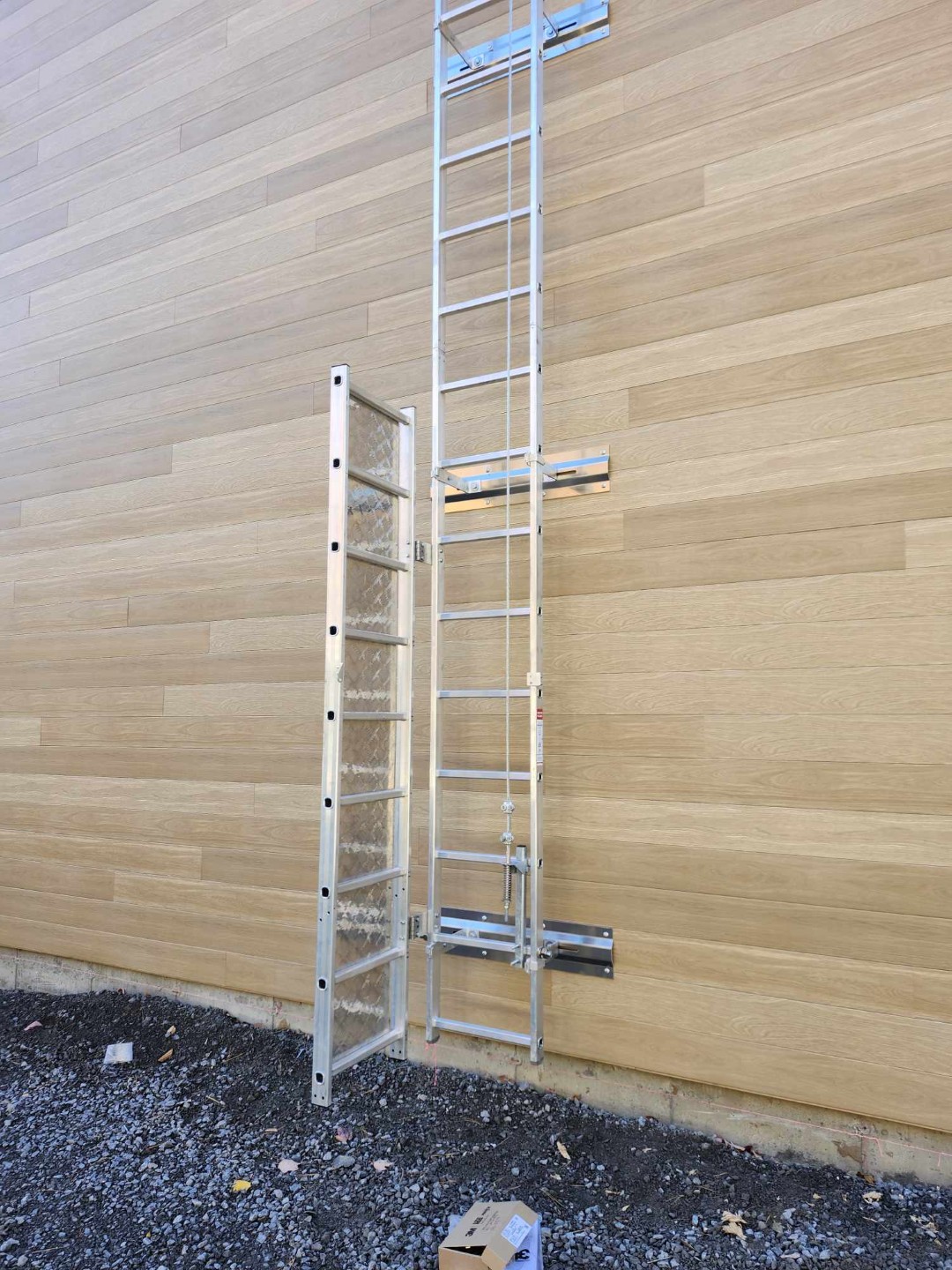
Brackets to suit your surface
The bracket is chosen to suit the surface: standard brackets for concrete, adjustable brackets, dedicated cladding brackets, or a ground-mounted base plate when the facade cannot take the loads. The choice is made during the survey, once the strength of the surface has been checked.
What the regulations require, even without a fall arrest system
Below the fall arrest threshold, the ladder must still meet the applicable requirements. In Quebec, section 23 of the RSST covers rung strength, front, rear and side clearances, and the extension above the top landing. In Ontario, the provisions of Regulation 851 apply, with a safety cage required above 5 m (16 ft).
Your questions about the standard fixed ladder
Up to what height can a fixed ladder be installed without a fall arrest system?
In Quebec, a fall arrest system becomes mandatory on new or modified fixed ladders once the fall hazard exceeds 6 m (19 ft 8 in). In Ontario, a safety cage is required from 5 m (16 ft) on fixed ladders in industrial establishments. Below those thresholds, a standard ladder is allowed, subject to the other applicable requirements.
Does a safety cage replace a fall arrest system?
In Quebec, the cage is first and foremost a protective structure around the ladder which, with a locking door, keeps access to authorized people. In Ontario, the safety cage is what Regulation 851 requires above 5 m. Our advisors will tell you what to plan for in your province and configuration.
Can a lifeline be added later?
Yes, a vertical lifeline can be added to an existing ladder. One caution in Quebec: modifying a ladder installed before 2019 removes its grandfathered status, and current requirements then apply. See the ladder with a vertical lifeline ›
How long does installation take?
Assembly is fully bolted, with no welding and no heavy equipment, which keeps site time short. The overall lead time depends mostly on manufacturing, stated in your quote.
Which access restriction system should I choose?
It depends on who needs to reach the equipment and how often. The half door is a deterrent and stays quick to operate, the door with cover plate locks, and the retractable entry removes the first rungs. Our advisors will guide you during the on-site survey.
What surfaces can it be fixed to?
Cladding, concrete, masonry, parapet or low wall, and ground-mounted on a footing when the facade cannot take the loads. The surface is checked during the survey, before the brackets are chosen.


